Guide
#15 Scalpel Blade: Uses, Handle Fit and #15 vs #15C
This is the #15 scalpel blade, not a #15 clipper blade for dog grooming. It has a small curved cutting edge made for short, precise cuts, and it fits #3 and #7 handles, not the #4. Need long, smooth strokes? Use a #10. Need extra reach from the same small edge? Use a #15C.
Not medical advice. We quote the maker on how surgeons use the #15 only to explain the shape. Our blades are sold for craft, hobby, study, dissection and suture practice, not as medical devices.
The #15 blade at a glance
| Spec | #15 scalpel blade |
|---|---|
| Shape | Small curved cutting edge. Swann Morton calls it “the most popular blade shape”. |
| Fitting | No. 3 range (blade shapes 6 to 16) |
| Fits these handles | #3 and #7 in our store. Swann Morton lists handles 3, 3L, 3 Graduated, 5B, 7, 9, B3 and B3L. |
| Does not fit | #4 handle |
| Same curve, longer edge | #15C, on the same #3 and #7 handles. Swann Morton: “a longer, more extended cutting edge than the traditional No.15 blade”. |
| Same shape, bigger | No direct twin on the #4 fitting. For a larger curved edge, take the #10 on the same handle, or the #20, #21 and #22 on a #4 handle. |
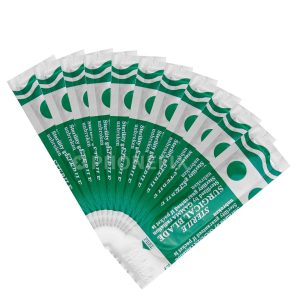
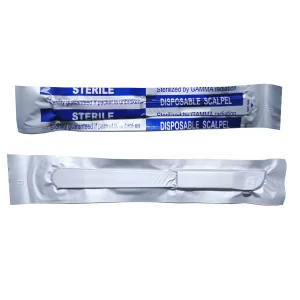
| Our packs | Carbon steel, 10 blades, each in its own sterile foil pouch (gamma radiation, as declared by the manufacturer) |
| Edge length | Not published by the maker, so we do not print one |
What a #15 blade is used for
The small curve is the point. A short, tightly curved edge lets you turn through a tight line or a small radius without the blade swinging wide, so short cuts stay precise.
| Job | Why the #15 works | Also look at |
|---|---|---|
| Suture practice pads | Short, controlled practice incisions | #10 for longer ones |
| Electronics, PCB and phone repair | Small, accurate cuts around components and adhesive | #11 for points and tight corners |
| Scale models and miniatures | Trimming and shaping small parts | #11 for corners |
| Clay and sculpture | Fine detail and small curved cuts | #12 for hooked cuts |
| Small dissection | Fine detail on small specimens | #10 for general dissection |
In surgery, Swann Morton says the No. 15 is “ideal for making short and precise incisions” (Swann Morton No. 15 product page, read 11/11/2026). That is the maker’s description of clinical use, not a use we sell for.
#15 vs #15C
The two have the same small curve and fit the same handles. The difference is the edge: the 15C has a longer, more extended cutting edge, so it reaches further.
| Blade | Shape | Reach | Our products |
|---|---|---|---|
| #15 | Small curved edge | Standard | Set, blades, disposables |
| #15C | Same curve, longer and more extended edge | Extra reach | Set, blades, disposables |
Swann Morton says the 15C “provides additional reach” and describes it for periodontal work, ideally with its B3 handle (Swann Morton No. 15C product page, read 11/11/2026).
The quick rule: pick the #15C when a deep or narrow spot keeps the standard #15 out of reach, and the #15 for everything else. Comparing it with the #10? That is in our #10 blade guide. The full chart for every number is in our scalpel blade sizes guide.
Which handle fits a #15 blade?
A #15 goes on a #3 handle, the standard flat handle, or the #7 handle, which is longer and slimmer. The #15C fits the same two. Neither will lock onto a #4 handle: the No. 4 fitting is larger. More on fittings in our scalpel handle sizes guide.
Shop #15 blades
No handle yet? Take the set. Have a #3 or #7? Take the blade pack. Want a fresh edge with nothing to fit? Take the disposables.
- Bestseller
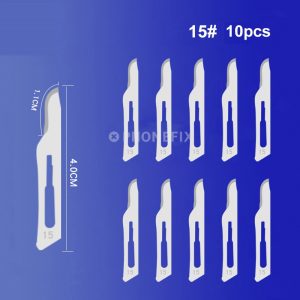
#15 Scalpel Set: #3 Stainless Handle + 10 Sterile #15 Blades
#15setScalpel Sets#3 handle + 10 sterile #15 blades. Original price was: $17.99.$15.99Current price is: $15.99. Add to cart -
#15 Scalpel Blades, Sterile Carbon Steel (Pack of 10)
#15bladesBlades for #3 Handles10 sterile blades. Fits #3 and #7 handles. Original price was: $14.99.$12.99Current price is: $12.99. $1.30 per bladeAdd to cart -
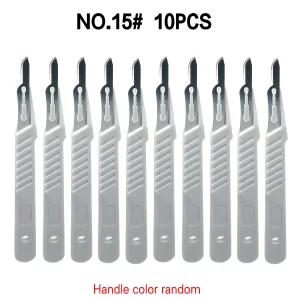
#15 Sterile Disposable Scalpels, Box of 10
#15disposableDisposable ScalpelsBox of 10, sterile, handle built in. Nothing to fit. $19.99 $2.00 per scalpel100+ sold worldwideAdd to cart
#15C
The same three options in the longer-reach shape.
-
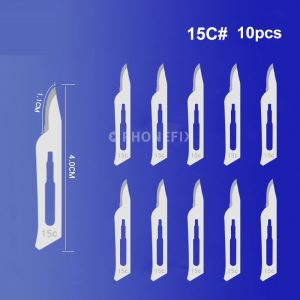
#15C Scalpel Set: #3 Stainless Handle + 10 Sterile #15C Blades
#15CsetScalpel Sets#3 handle + 10 sterile #15C blades. $15.99 Add to cart -
#15C Scalpel Blades, Sterile Carbon Steel (Pack of 10)
#15CbladesBlades for #3 Handles10 sterile blades. Fits #3 and #7 handles. $12.99 $1.30 per bladeAdd to cart -

#15C Sterile Disposable Scalpels, Box of 10
#15CdisposableDisposable ScalpelsBox of 10, sterile, handle built in. Nothing to fit. $19.99 $2.00 per scalpel100+ sold worldwideAdd to cart
For suture practice
The #15 is the first blade we point to for practice incisions on suture pads. We do not sell the pads, so we link none, but the #15 set gives you a handle and ten blades to practise with.
Fitting and changing a #15 safely
- Fit and remove blades with pliers or a blade remover, never your fingers.
- Carbon steel can rust: dry the blade after use and store it dry.
- Drop used blades into a blade disposal box, never the bin.
Frequently asked questions
A #15 scalpel blade is used for short, precise cuts. Swann Morton describes it as a small curved edge, ideal for short and precise incisions. In our store it goes to suture practice, electronics repair, scale models, clay and small dissection. It is not the #15 clipper blade used in dog grooming.
A 15 blade scalpel is a scalpel with a No. 15 blade: a small blade with a short curved cutting edge that clips onto a #3 or #7 handle. Swann Morton calls it the most popular blade shape. A disposable #15 scalpel has the blade and a plastic handle in one piece.
The #15 is a small blade with a short curved edge, and it belongs to the No. 3 fitting, so it fits #3 and #7 handles. The maker does not publish an edge length, so we do not print one.
Of the three, the #10 is the one we sell for dermaplaning, because its broad curved edge glides at a shallow angle. The #15 has a small edge and the #11 a point, so neither suits long, flat strokes over skin. See the dermaplaning section of our #10 guide, and ask a dermatologist first if you are unsure about your skin.
Both have the same small curved edge and fit the same #3 and #7 handles. The 15C has a longer, more extended edge that gives additional reach, according to Swann Morton. Choose the #15C for deep or narrow spots and the #15 for everything else.
No. The #15 belongs to the No. 3 fitting and fits #3 and #7 handles. For a #4 handle, choose a #20, #21 or #22.