Guide
#10 Scalpel Blade: Shape, Handle Fit and Uses (vs #15 and #11)
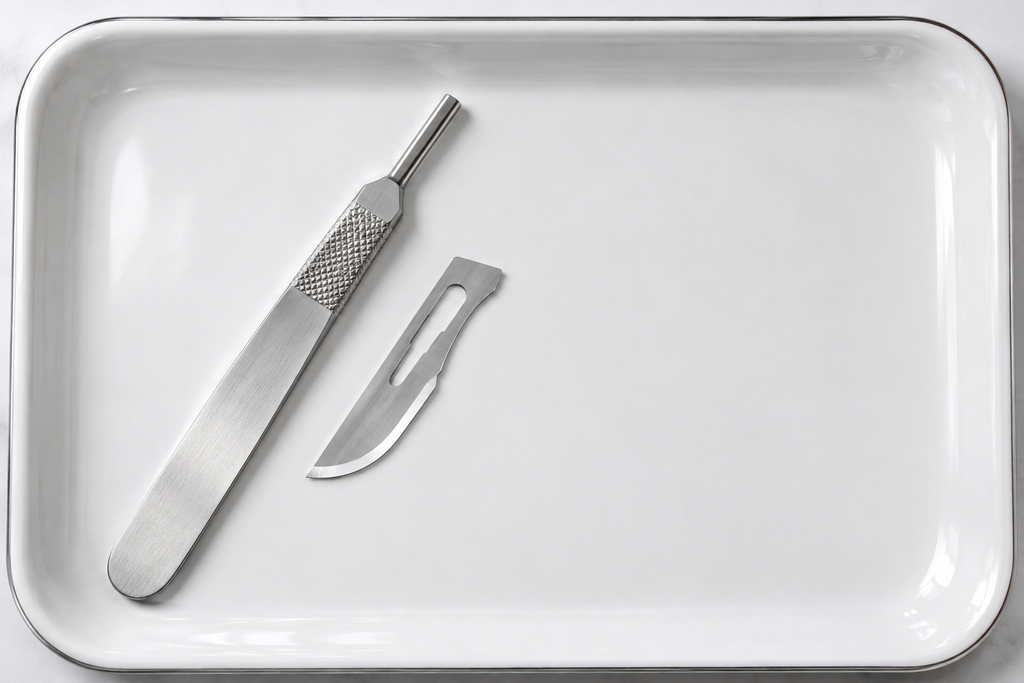
The #10 is the classic curved scalpel blade: a large, curved cutting edge with a rounded belly, made for long, smooth strokes. It fits #3 and #7 handles, not the #4. Need short, tight cuts? Use a #15. Need a sharp point? Use a #11.
Not medical advice. We quote the maker on how surgeons use the #10 only to explain the shape. Our blades are sold for craft, hobby, study, dissection and dermaplaning, not as medical devices.
The #10 blade at a glance
| Spec | #10 scalpel blade |
|---|---|
| Shape | Large curved cutting edge with a rounded belly. Swann Morton calls it “one of the more traditional blade shapes”. |
| Fitting | No. 3 range (blade shapes 6 to 16) |
| Fits these handles | #3 and #7 in our store. Swann Morton lists handles 3, 3L, 3 Graduated, 5B, 7, 9 and B3. |
| Does not fit | #4 handle |
| Same shape, bigger | #20, #21 and #22, all on the #4 handle |
| Our packs | Carbon steel, 10 blades, each in its own sterile foil pouch (gamma radiation, as declared by the manufacturer) |
| Edge length | Not published by the maker, so we do not print one |
What a #10 blade is used for
The curve is the point. A long, curved edge lets you draw the blade through a cut instead of pressing down with a tip, so long strokes stay smooth and even.
| Job | Why the #10 works | Also look at |
|---|---|---|
| Crafts, paper, card and film | Long, sweeping cuts and clean trimming | #11 for corners and points |
| Leather | Skiving and trimming edges | #23 on a #4 handle for long cuts in thick hide |
| Dissection and lab study | General dissection of small specimens | #15 for fine detail |
| Taxidermy | Skinning smaller specimens | #22 or #23 for large ones |
| Suture practice pads | Longer practice incisions | #15 for short, precise ones |
| Dermaplaning | A broad edge that glides at a shallow angle | See the dermaplaning section below |
In surgery, Swann Morton says the No. 10 “is used generally for making varying sizes of incision in skin and muscle” (Swann Morton No. 10 product page, read 11/11/2026). That is the maker’s description of clinical use, not a use we sell for.
#10 vs #15 vs #11
All three fit the same #3 handle, so the choice is only about the cut.
| Blade | Shape | Best for |
|---|---|---|
| #10 | Large curved edge | Long, smooth strokes |
| #15 | Small curved edge, the maker’s most popular shape | Short, precise cuts |
| #11 | Elongated triangle with a strong pointed tip | Piercing, corners and fine point work |
The quick rule: if the job is a long line, take the #10. If it is a small, tight curve, take the #15. If it starts with a point, take the #11. The full chart for every number is in our scalpel blade sizes guide.
Which handle fits a #10 blade?
A #10 goes on a #3 handle, the standard flat handle, or the #7 handle, which is longer and slimmer. It will not lock onto a #4 handle: the No. 4 fitting is larger.
Already own a #4 handle? Swann Morton describes the #20, #21 and #22 as large versions of the No. 10, with the same curved edge and a flat, unsharpened back: see our #20, #21 and #22 blade guide. More on fittings in our scalpel handle sizes guide.
Shop #10 blades
No handle yet? Take the set. Have a #3 or #7? Take the blade pack. Want a fresh edge with nothing to fit? Take the disposables.
- Bestseller
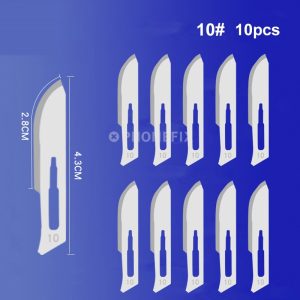
#10 Scalpel Set: #3 Stainless Handle + 10 Sterile #10 Blades
#10setDermaplaning#3 handle + 10 sterile #10 blades. Original price was: $17.99.$15.99Current price is: $15.99. Add to cart -
#10 Scalpel Blades, Sterile Carbon Steel (Pack of 10)
#10bladesBlades for #3 Handles10 sterile blades. Fits #3 and #7 handles. Original price was: $14.99.$12.99Current price is: $12.99. $1.30 per bladeAdd to cart -
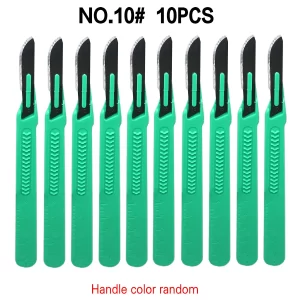
#10 Sterile Disposable Scalpels, Box of 10
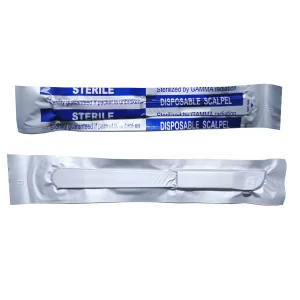
#10disposableDisposable ScalpelsBox of 10, sterile, handle built in. Nothing to fit. $19.99 $2.00 per scalpel100+ sold worldwideAdd to cart
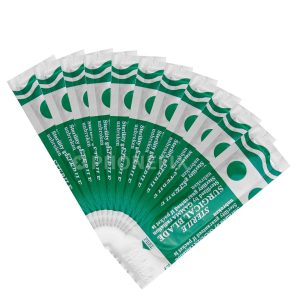
The #10 for dermaplaning
The #10 is the blade we sell for dermaplaning, because its broad curved edge lies almost flat against the skin. The #10R and the #14 are also common choices for this, and we do not sell those two.
Everything for it is on one page: dermaplaning blades, handle and set. Before you start, read how to dermaplane at home, how often to dermaplane and dermaplaning vs shaving. If your skin is irritated, broken or under treatment, ask a dermatologist first.
Fitting and changing a #10 safely
- Fit and remove blades with pliers or a blade remover, never your fingers.
- Carbon steel can rust: dry the blade after use and store it dry.
- Drop used blades into a blade disposal box, never the bin.
Frequently asked questions
Use the #10 for long, smooth strokes and the #15 for short, precise cuts. Swann Morton describes the #10 as a curved blade for incisions of varying size and the #15 as a small curved edge, ideal for short and precise incisions. Both fit the same #3 handle.
Yes. A scalpel is the whole tool: a handle plus a blade. A 10 blade is one blade shape that clips onto a #3 or #7 handle. A disposable #10 scalpel has the blade and a plastic handle in one piece.
Of the three, the #10 is the one we sell for dermaplaning, because its broad curved edge glides at a shallow angle. The #11 is a pointed blade made for piercing cuts, which is the wrong shape for gliding over skin. If you are unsure about your skin, ask a dermatologist first.
The #20 is a large version of the #10, with the same curved edge on a bigger blade that fits the #4 handle. Choose it for heavier cutting and larger specimens.
No. The #10 belongs to the No. 3 fitting and fits #3 and #7 handles. For a #4 handle, choose a #20, #21 or #22.
Our packs of 10 blades and our disposable #10 scalpels are supplied sterile, sealed in individual pouches and sterilized by gamma radiation as declared by the manufacturer. Sterility holds while the pouch is unbroken. They are not sold as medical devices.