Guide
#20, #21 and #22 Scalpel Blades: Sizes, Handle Fit and Uses
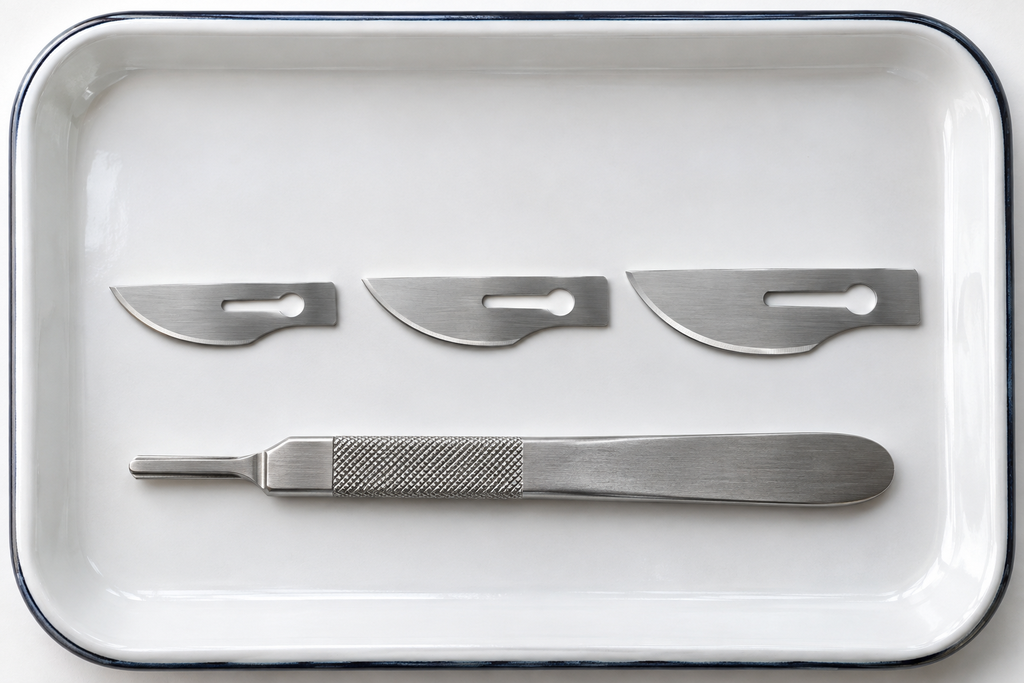
The #20, #21 and #22 are three sizes of one shape: a big version of the #10 curved blade, all on the #4 handle. The #20 is the smallest, the #21 sits in the middle and the #22 is the largest of the three. The bigger the specimen or material, the bigger the number. None of them fit a #3 or #7 handle: for that, use a #10.
Not medical advice. We quote the maker on how surgeons use these blades only to explain the shape. Our blades are sold for craft, hobby, study, dissection and taxidermy, not as medical devices.
The #20, #21 and #22 blades at a glance
| Spec | #20 | #21 | #22 |
|---|---|---|---|
| Shape | Large version of the No. 10: curved cutting edge, flat unsharpened back | Same shape, larger than the #20 and smaller than the #22 | Same shape, larger than the #20 and #21 |
| Fitting | No. 4 range | No. 4 range | No. 4 range |
| Fits these handles | #4 in our store. Swann Morton lists 4, 4L, 4 Graduated and 6B. | Same as the #20 | Same as the #20 |
| Does not fit | #3 and #7 handles | #3 and #7 handles | #3 and #7 handles |
| Same shape, smaller | #10 on a #3 or #7 handle | #10, or the #20 | #10, or the #20 and #21 |
| Our packs | Carbon steel, 10 blades, each in its own sterile foil pouch (gamma radiation, as declared by the manufacturer) | ||
| Edge length | Not published by the maker, so we do not print one | ||
What #20, #21 and #22 blades are used for
The curve is the same as on the #10: a long edge you draw through the cut. The extra size gives you a longer stroke through bigger or tougher material.
| Job | Why a large curved blade works | Also look at |
|---|---|---|
| Large specimens, necropsy and anatomy labs | One long stroke covers a lot of tissue. We list the #22, #23, #20 and #21 for this, in that order. | #23 |
| Taxidermy and skinning | Long, even cuts along a hide | #23 first, then the #22 |
| Leather | Long cuts in thick hide | #23 on the same #4 handle |
In surgery, Swann Morton says the No. 22 is “used for skin incisions in both cardiac and thoracic surgery” and the No. 20 for “orthopaedic and general surgical procedures” (Swann Morton product pages, read 11/11/2026). That is the maker’s description of clinical use, not a use we sell for.
#20 vs #21 vs #22, and #10 vs #22
The maker describes all three with the same words, and only the size changes. The #21 is described as “larger than the No.20 but smaller than the No.22”.
| Blade | Size in the family | Handle | Pick it for |
|---|---|---|---|
| #10 | The standard size | #3 or #7 | Everyday long strokes on small to medium work |
| #20 | Smallest of the large three | #4 | Larger work where you want some control |
| #21 | Middle | #4 | The step between the two |
| #22 | Largest of the three | #4 | Big specimens and long cuts in thick material |
#10 vs #22: same curved shape, but the #22 is the large version on a different fitting, so it needs a #4 handle. The #10 is for smaller jobs on a #3 or #7. If the job is skinning or thick hide, look at the #23 too. The full chart for every number is in our scalpel blade sizes guide.
Which handle fits a #20, #21 or #22 blade?
All three go on a #4 handle and nothing else we sell. They will not lock onto a #3 or #7 handle, which take the No. 3 fitting.
Have a #3 or #7 handle? Use the #10, the same shape in the smaller size. More on fittings in our scalpel handle sizes guide.
Shop #20, #21 and #22 blades
One short row per blade. You will also need the #4 handle at the end if you do not own one.
#20 blades
-
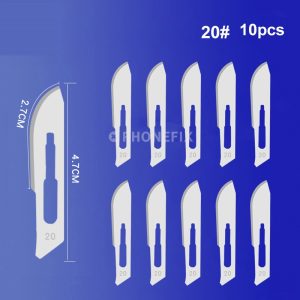
#20 Scalpel Set: #4 Stainless Handle + 10 Sterile #20 Blades
#20setScalpel Sets#4 handle + 10 sterile #20 blades. $15.99 Add to cart -
#20 Scalpel Blades, Sterile Carbon Steel (Pack of 10)
#20bladesBlades for #4 Handles10 sterile blades. Fits #4 handle. Original price was: $14.99.$12.99Current price is: $12.99. $1.30 per bladeAdd to cart
#21 blades
-
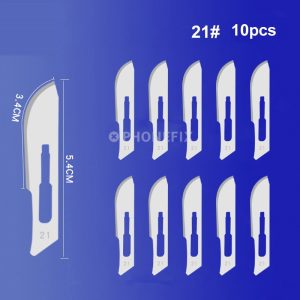
#21 Scalpel Set: #4 Stainless Handle + 10 Sterile #21 Blades
#21setScalpel Sets#4 handle + 10 sterile #21 blades. $15.99 Add to cart -
#21 Scalpel Blades, Sterile Carbon Steel (Pack of 10)
#21bladesBlades for #4 Handles10 sterile blades. Fits #4 handle. Original price was: $14.99.$12.99Current price is: $12.99. $1.30 per bladeAdd to cart
#22 blades
-
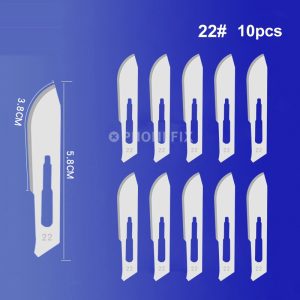
#22 Scalpel Set: #4 Stainless Handle + 10 Sterile #22 Blades
#22setScalpel Sets#4 handle + 10 sterile #22 blades. $15.99 Add to cart -
#22 Scalpel Blades, Sterile Carbon Steel (Pack of 10)
#22bladesBlades for #4 Handles10 sterile blades. Fits #4 handle. Original price was: $14.99.$12.99Current price is: $12.99. $1.30 per bladeAdd to cart
#4 handle

Fitting and changing a large blade safely
- Fit and remove blades with pliers or a blade remover, never your fingers. Larger blades are heavier and the edge is longer.
- Carbon steel can rust: dry the blade after use and store it dry.
- Drop used blades into a blade disposal box, never the bin.
Frequently asked questions
The #22 is the large version of the #10, with a curved cutting edge and a flat, unsharpened back, on the #4 fitting. We list it first for large specimens and dissection, and it also suits taxidermy. Swann Morton describes its clinical use as skin incisions in cardiac and thoracic surgery, which is not a use we sell for.
They share the same curved shape. The #22 is the larger version and fits the #4 handle, while the #10 fits #3 and #7 handles. Pick the #10 for everyday long strokes and the #22 for big specimens and thick material.
Of the curved #10-style blades, the #22 is the largest: Swann Morton describes it as larger than the #20 and #21. We do not claim it is the largest of every blade shape. For a leaf-shaped large blade on the same handle, see the #23.
The #20 is a large version of the #10 with the same curved edge, the smallest of the three big sizes. Choose it for larger work where a #10 is too small. It fits the #4 handle. Swann Morton lists orthopaedic and general surgery as its clinical use, which is not something we sell for.
No. The #22 belongs to the No. 4 fitting and fits #4 handles. For a #3 handle, use a #10, the same shape in the smaller size.